Introduction
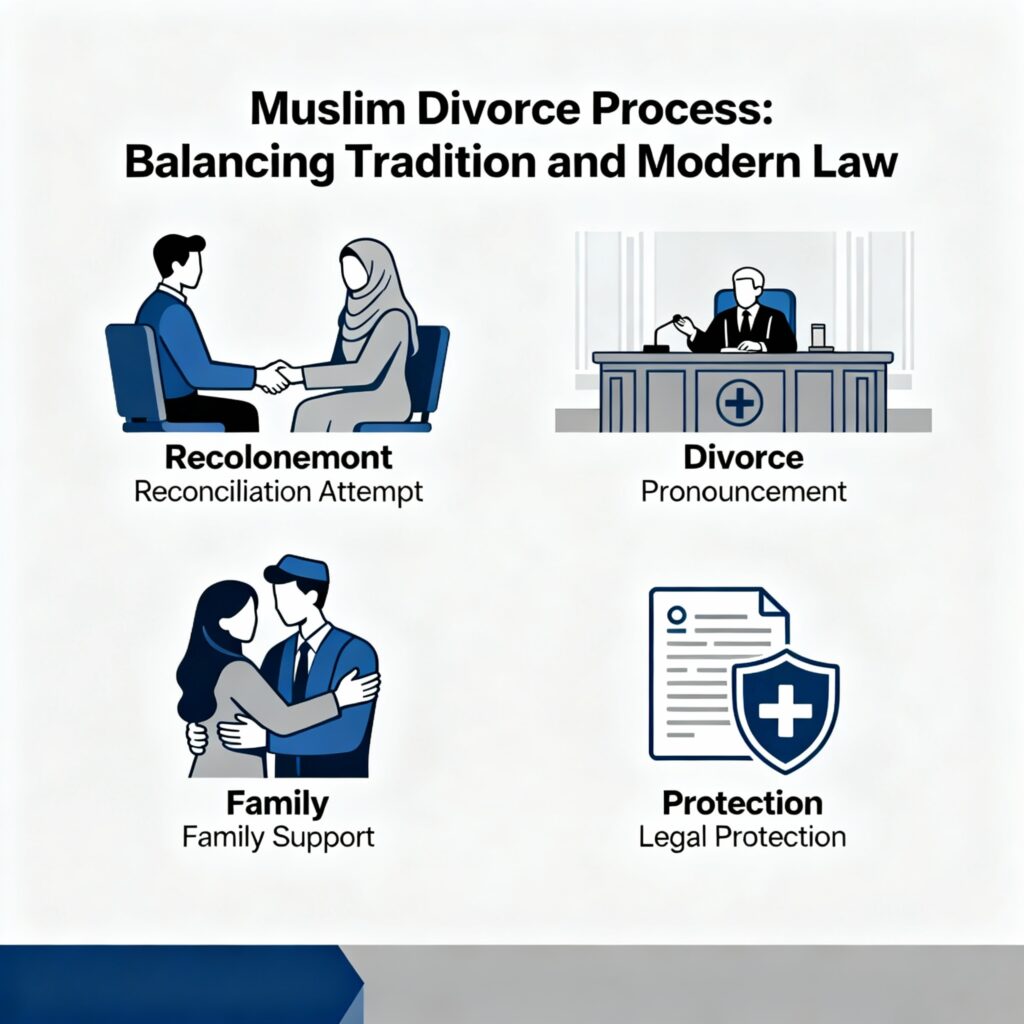
Principles of Muslim Divorce and Protection
Muslim divorce, particularly Talaq-e-Ahsan, is governed by personal laws that balance the right to separation with the protection of dignity, welfare, and fairness for both spouses and children. This structured process ensures reconciliation efforts, respects the Iddat period, and upholds financial and social responsibilities. Understanding the legal framework helps families navigate divorce with respect, clarity, and minimal conflict.
Muslim divorce is not merely a pronouncement—it is a carefully regulated process designed to protect the rights and dignity of all parties involved:
- Reconciliation First: Islamic law emphasizes reconciliation and counseling before finalization of divorce.
- Protection of Women’s Rights: The wife is entitled to Mahr (dower), maintenance during Iddat, and custody rights for young children.
- Dignity and Respect: The process must be conducted with dignity, avoiding harm or humiliation.
- Child Welfare: Children’s emotional, financial, and social welfare remains paramount throughout and after divorce.
- Legal Recognition: Proper documentation and legal compliance ensure enforceability and protection of rights in court.
Step-by-Step Talaq-e-Ahsan Procedure
Talaq-e-Ahsan is considered the most dignified form of divorce in Islam. Here’s how the process works:
1. Reconciliation and Mediation Efforts
Before pronouncing Talaq, the husband and wife should attempt reconciliation through family members, community elders, or legal mediators. Islamic law encourages resolving disputes amicably.
2. Single Clear Pronouncement
The husband pronounces Talaq once during a period when the wife is in a state of purity (Tuhr), meaning not menstruating and without intercourse during that period. This ensures the pronouncement is deliberate and not impulsive.
3. Iddat Period and Rights
Following the pronouncement, the wife observes the Iddat period (typically three menstrual cycles or three lunar months). During this time:
- The husband must provide maintenance and shelter.
- Both parties are encouraged to reconsider and reconcile.
- If reconciliation occurs, the marriage continues without needing remarriage.
4. Completion and Fulfillment of Obligations
If the Iddat period expires without reconciliation, the divorce becomes final. The husband must:
- Pay the full Mahr (dower) if unpaid.
- Provide maintenance for the Iddat period and, where applicable, post-divorce support.
- Ensure proper documentation and legal registration of the divorce.
- Respect property settlement and custody arrangements.
Safeguards for Children and Family
Divorce affects the entire family, especially children. Islamic and Indian family law provide safeguards:
- Child Custody (Hizanat): Young children, especially those under seven, typically remain with the mother. The best interests of the child guide custody decisions.
- Financial Support: Fathers are responsible for the financial maintenance of children regardless of custody arrangements.
- Visitation Rights: Non-custodial parents have the right to maintain a relationship with their children.
- Education and Welfare: Both parents remain responsible for the child’s education, health, and overall development.
- Respectful Separation: Parents are encouraged to minimize conflict and avoid exposing children to hostility.
Key Takeaways & Legal Advice
Key Takeaways:
- Talaq-e-Ahsan is a dignified, structured divorce process emphasizing reconciliation and protection.
- Both spouses have clearly defined rights and responsibilities throughout the process.
- Children’s welfare, dignity, and fair treatment are central to the law.
- Proper documentation and legal registration are essential for enforceability.
Legal Advice:
Every divorce case is unique, with specific circumstances involving property, custody, maintenance, and personal rights. It is strongly advisable to consult an expert family law advocate to:
- Understand your rights and obligations under Muslim personal law and Indian family law.
- Ensure proper legal documentation and registration.
- Protect your interests and those of your children.
- Navigate court proceedings if necessary.
- Explore reconciliation and mediation options before finalization.
Consult a qualified advocate to ensure fairness, dignity, and legal protection throughout the divorce process.